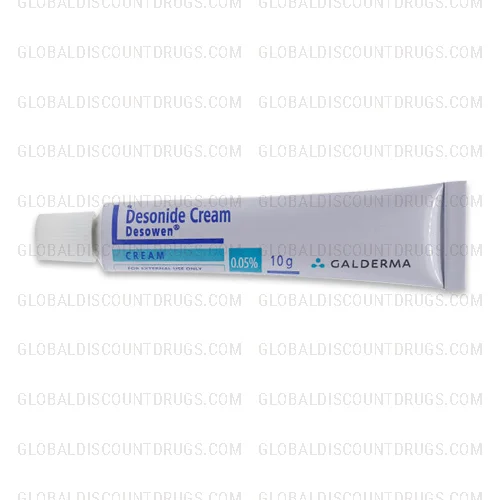
Desonide 0.05% Cream 10g
Out of StockDesonide 0.05% Cream 10g is a low-potency topical corticosteroid used to treat various skin conditions, including eczema, dermatitis, and psoriasis. It reduces inflammation, redness, and itching, providing relief from discomfort and promoting healing. Suitable for sensitive skin areas, Desonide 0.05% Cream is an effective and gentle option for managing inflammatory skin disorders.
| Active Ingredient: | Desonide |
|---|---|
| Indication: | Dermatitis |
| Strength: | 0.05% 10g |
| Dosage Form: | Cream |
| Manufacturer: | Galderma |

Desonide 0.05% Cream – Quick Overview
Desonide 0.05% Cream is a prescription topical corticosteroid used to treat redness, swelling, itching, and discomfort from skin conditions such as eczema and psoriasis. It works by activating natural substances in the skin to reduce inflammation and calm irritation. This is a low-potency topical steroid that should be used only as prescribed and under medical supervision.
Medical Supervision & Regulatory Status
Desonide 0.05% Cream is available only by prescription in the United States and is regulated by the FDA as a low-potency topical corticosteroid. Medical supervision is required to confirm the diagnosis, determine the appropriate treatment area and duration, and monitor for signs of skin thinning or hormonal side effects with prolonged use.
Clinical Context
Chronic inflammatory skin conditions like eczema and psoriasis cause red, scaly, itchy patches that can significantly affect comfort and quality of life. These conditions often flare periodically and require targeted treatment to control symptoms during active episodes.
Treatment is needed to reduce inflammation, relieve itching, and calm flare-ups, helping prevent skin damage from scratching and reducing the discomfort associated with active lesions. Topical corticosteroids are a first-line option for many inflammatory skin conditions because they act directly at the site of irritation.
Desonide fits into dermatologic therapy as a low-potency corticosteroid, often preferred for sensitive skin areas, thinner skin, or pediatric patients where stronger steroids carry a higher risk of side effects.
How Desonide Works
Desonide belongs to the topical corticosteroid drug class, specifically classified among the lower-potency options within this category, making it suitable for more delicate skin areas.
Desonide works by activating natural anti-inflammatory substances in the skin, which reduces swelling, redness, and itching, and may also narrow blood vessels at the application site to further reduce visible inflammation.
For patients, this mechanism translates into calmer, less irritated skin, with visible improvement in redness and itching typically noticeable within the first two to four weeks of consistent, correct use.
What is Desonide 0.05% Cream?
- Drug Class: Low-potency topical corticosteroid
- Active Ingredient: Desonide 0.05%
- Mechanism: Activates natural anti-inflammatory pathways in the skin, reducing swelling, redness, and itching
- Form: Topical cream, 10g tube
- Dosing Frequency: Typically applied 2 to 4 times daily, as directed
- Regulatory Status: Prescription only (Rx) in the United States
Uses / Indications
- Eczema (Atopic Dermatitis): Reduces redness, dryness, and itching associated with eczema flares
- Psoriasis: Helps reduce the redness, scaling, and discomfort of psoriasis patches
- Other Corticosteroid-Responsive Dermatoses: Used for various inflammatory skin conditions that respond to topical steroid treatment, as determined by your doctor
Desonide is not effective for fungal, bacterial, or viral skin infections and should not be used for these conditions.
How to Use / Dosage
Your doctor will determine the treatment area, frequency, and duration based on your specific skin condition. Apply a thin layer of cream to the affected area, usually two to four times daily, gently rubbing it in; wash your hands afterward unless treating your hands, and avoid covering the treated area with a bandage or wrap unless your doctor specifically directs you to, as covering can increase absorption and side-effect risk.
If you miss a dose, apply it as soon as you remember, unless it’s close to your next scheduled application — do not double up. Do not use this medication for longer than prescribed or discontinue a long-term course abruptly; your doctor may recommend gradually reducing use to prevent flare-up rebound.
Side Effects
Most patients tolerate desonide cream well when used as directed for the recommended treatment duration. Common side effects include mild burning, stinging, itching, or dryness at the application site.
Serious effects are uncommon but can include skin thinning, stretch marks, and, with extensive or prolonged use, absorption into the bloodstream leading to hormonal changes such as adrenal insufficiency or Cushing’s syndrome.
Emergency Warning Signs — Seek immediate medical attention if you experience:
- Signs of a severe allergic reaction, such as swelling of the face, lips, or throat, hives, or difficulty breathing
- Unusual weight gain, particularly in the face or upper back, with pink or purple stretch marks
- Severe skin irritation, blistering, or worsening rash at the application site
- Unusual tiredness, muscle weakness, or unexplained weight loss (possible signs of adrenal insufficiency)
- Vision changes or eye pain if the medication accidentally contacts the eyes
- Signs of skin infection developing at the treated area
Warnings & Precautions
Desonide should not be used by patients with a known hypersensitivity to desonide or other corticosteroids, and should not be applied to the face, underarms, or groin unless specifically directed by your doctor, as these areas absorb medication more readily. Avoid contact with the eyes, nose, and mouth.
Regarding drug interactions, topical desonide is not typically associated with significant systemic drug interactions due to minimal absorption when used correctly; however, your doctor should still be informed of all medications you use, particularly other topical or systemic corticosteroids, to avoid cumulative steroid exposure.
For pregnancy and breastfeeding, use should be discussed with your doctor, particularly for treatment over large areas or for extended periods, as increased absorption could pose risks. Special populations, including infants and children, may be at higher risk for side effects such as adrenal suppression and Cushing’s syndrome due to a larger skin-surface-to-body-weight ratio, so pediatric use requires close physician oversight and typically shorter treatment courses. Extended or high-dose use, or use under occlusive dressings, increases the risk of both local skin thinning and systemic hormonal effects, so ongoing monitoring is recommended for any long-term therapy.
Who Should Not Use This Medication
- Individuals with a known allergy to desonide or other corticosteroid medications
- Patients with untreated skin infections at the application site (bacterial, viral, or fungal)
- Individuals planning to use this cream on the face, underarms, or groin without specific physician direction
- Patients advised against covering treated skin with bandages or occlusive dressings without physician guidance
- Patients using this medication for a condition not evaluated and diagnosed by their doctor
Storage Instructions
Store Desonide 0.05% Cream at room temperature, between 68°F and 77°F (20°C to 25°C), away from excessive heat and moisture. Keep the tube tightly closed and protect from direct light. Keep out of reach of children and pets, and do not use past the expiration date printed on the packaging.
Frequently Asked Questions
Is a prescription required for Desonide 0.05% Cream?
Yes, desonide cream requires a valid prescription in the United States. A doctor must diagnose your skin condition and confirm this treatment is appropriate before dispensing.
How long does it take for Desonide to work?
Most patients notice improvement in redness and itching within the first 2 weeks of consistent use. Contact your doctor if symptoms haven’t improved within that time.
Is it safe to stop using Desonide once symptoms improve?
For short-term use, stopping once your doctor’s recommended course is complete is generally appropriate. For longer courses, your doctor may recommend gradually reducing use rather than stopping abruptly, to avoid rebound flare-ups.
Can Desonide interact with other medications?
Topical desonide has minimal systemic absorption and few significant drug interactions when used as directed, but you should still tell your doctor about other topical or oral steroids you use, to avoid excess steroid exposure.
What should I do if I miss a dose?
Apply the missed dose as soon as you remember, unless it’s close to your next scheduled application. Do not apply extra cream to make up for a missed dose.
What is the cost of Desonide Cream without insurance?
Generic desonide cream is generally more affordable than brand-name versions. The cost without insurance depends on the seller, brand availability, and pack size, and may also vary by location and available discounts.
How can I order Desonide Cream online?
A valid prescription is required to order this medication. Typically, you upload your prescription or have your doctor send it directly to a licensed pharmacy for home delivery. Always use verified, licensed pharmacies to ensure product safety and authenticity.
Is Desonide available over the counter?
No, desonide is not available over the counter in most countries, including the United States. Regulations may vary by region, but medical supervision is generally required for safe use.
References
-
- MedlinePlus (NIH) – Desonide Topical: https://medlineplus.gov/druginfo/meds/a605025.html
- WebMD – Desonide Topical: Uses, Side Effects, Interactions, Warnings & Dosing: https://www.webmd.com/drugs/desonide-topical
Medical Disclaimer
This content is for informational purposes only and does not constitute medical advice, diagnosis, or treatment. Consult a qualified specialist or physician before using Desonide 0.05% Cream.
Prescription Required (Rx) to Buy?
This medication is not available over the counter. A valid prescription from a licensed healthcare
professional is required. Always consult your doctor before use.
| Quantity | 12, 3, 6, 9 |
|---|---|
| Indication | Dermatitis |
| Active Ingredient | Desonide |
| Pharmaceutical Form | Cream |
| Manufacturer | Galderma |
| Indian Brand | Desowen 0.05% Cream 10g |
| US Brand Name | Desonide |
| Generic Name | Desonide |
| Dosage | 0.05% 10g |
| Drug Type | Tubes |