
Becosules
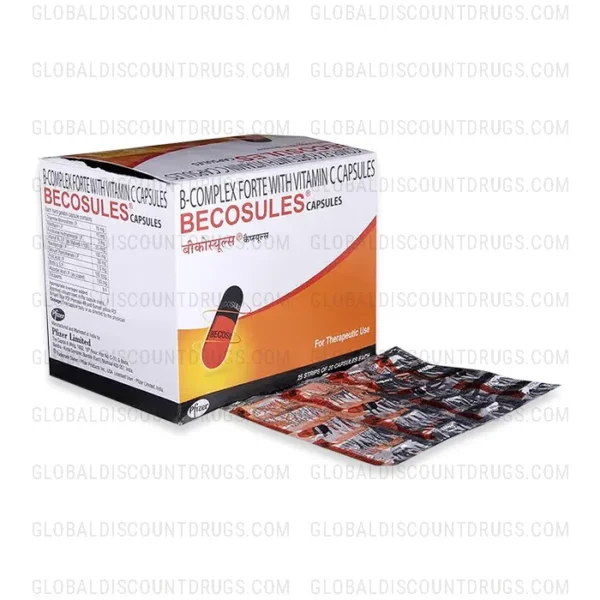
Out of StockBecosules Capsule contains B-complex vitamins with vitamin C to help prevent or treat nutritional deficiencies when dietary intake is inadequate. It is a nutritional supplement and not a substitute for disease-specific treatment.
| Active Ingredient: | Vitamin |
|---|---|
| Indication: | Vitamin B Complex Deficiency |
| Dosage Form: | Capsules |
| Manufacturer: | Pfizer Ltd |

What is Becosules?
Becosules is a brand name for a multivitamin capsule that combines B-group vitamins with vitamin C. These vitamins help the body turn food into energy and support the nervous system, blood cells, skin, and general health.
Drug class: Vitamin / dietary supplement (B-complex with vitamin C).
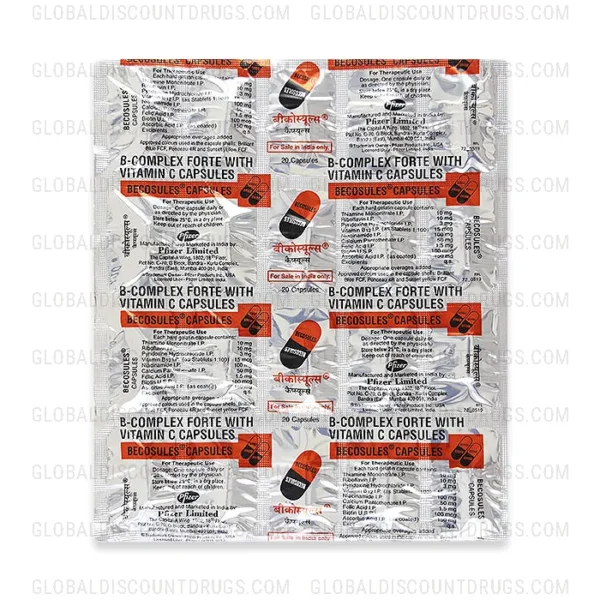
Typical ingredients: Becosules capsules generally contain several B vitamins and vitamin C, such as:
- Vitamin B1 (thiamine)
- Vitamin B2 (riboflavin)
- Vitamin B3 (niacinamide)
- Vitamin B5 (pantothenic acid)
- Vitamin B6 (pyridoxine)
- Vitamin B12 (cyanocobalamin)
- Folic acid (vitamin B9)
- Biotin (vitamin B7)
- Vitamin C (ascorbic acid)
Common uses:
- Preventing or treating deficiencies of B vitamins and vitamin C
- Nutritional support during illness, recovery after surgery, or periods of poor diet
- Supporting people with higher vitamin needs, such as during pregnancy (as advised by a doctor) or with certain long-term conditions
- Use when a doctor finds that dietary intake is too low
Formulations and strengths: Becosules is sold mainly as capsules. Some products in the Becosules range have added ingredients, such as zinc or other minerals. The exact amount of each vitamin depends on the product and market, so check the carton or strip for the full list.
What is the Recommended Dosage of Becosules?
The right amount depends on several personal factors, including:
- The reason for use: Preventing a deficiency needs a different plan than treating one.
- Age: Children, adults, and older adults have different needs.
- Body weight and diet: Poor diet or weight loss may change needs.
- Pregnancy or breastfeeding: Vitamin needs are higher, and a doctor should guide use.
- Kidney, liver, or digestive health: These conditions can affect how vitamins are absorbed or cleared.
- Other medicines: Some drugs change vitamin levels.
Available dosage form: Oral capsule. The vitamin amounts are listed on the pack.
Becosules is usually taken by mouth, once a day or as directed. Dosing must follow your licensed medical specialist’s instructions or the directions on the product label. Do not take more than directed. Do not give this product to a child unless a healthcare provider has advised it.
General use tips:
- Swallow the capsule whole with water.
- Taking it after a meal may reduce stomach upset.
- Take it at about the same time each day.
How Becosules Works
Each vitamin in Becosules has its own job:
- B1, B2, B3, and B5 help the body turn food into energy.
- B6, B12, and folic acid help make red blood cells and support nerve function. Folic acid is also important for cell growth.
- Biotin supports normal skin, hair, and nail health as part of nutrition.
- Vitamin C supports the immune system, helps wounds heal, and helps the body absorb iron from food.
When the body is low in these vitamins, a supplement can help restore normal levels. The product is not a cure for disease. If your levels are already normal, extra vitamins usually do not provide added benefit.
Is a Prescription Required to Buy Becosules Online?
Rules differ by country. In many places, multivitamin supplements like Becosules are sold without a prescription, but some are labeled as prescription products. It is still wise to speak with a licensed medical specialist before starting, especially if you have a health condition, are pregnant, or take other medicines.
Who to consult:
- A primary care physician or general practitioner for nutrition or deficiency concerns
- A registered dietitian for diet-based planning
- A gynecologist or obstetrician if you are pregnant or planning pregnancy
- A pediatrician for children
- A neurologist or other specialist if you have nerve symptoms such as numbness or tingling
Buying safely:
- Purchase only from licensed pharmacies or authorized sellers.
- Beware of counterfeit or tampered products. Check that the packaging is sealed, the printing is clear, and the batch number and expiry date are shown.
- Do not buy products that look different from the original or that come from unknown sellers.
Side Effects of Becosules
Most people tolerate B-complex and vitamin C well at the amounts in the product.
Common Side Effects
- Bright yellow or orange urine (this is harmless and caused by riboflavin)
- Nausea
- Stomach upset or cramps
- Diarrhea or loose stools
- Heartburn
- Mild flushing or warmth of the skin (can happen with niacin-type vitamins)
These effects are usually mild and often go away. Taking the capsule with food may help.
Serious Side Effects
Serious problems are uncommon but can occur, especially with high doses or long-term use:
- Signs of allergic reaction: rash, hives, itching, swelling of the face, lips, or throat, or trouble breathing
- Severe or ongoing stomach pain, vomiting, or diarrhea
- New numbness, tingling, or burning in the hands or feet (can occur with very high vitamin B6 intake over time)
- Yellowing of the skin or eyes, dark urine, or severe tiredness (rare liver effects with high niacin intake)
- Kidney stone symptoms, such as severe back or side pain, or blood in the urine (can occur with high vitamin C intake in some people)
Seek immediate medical attention if you have signs of a serious allergic reaction or any symptom that worries you. Contact your healthcare provider if side effects continue or get worse.
Drug Interactions
Vitamins can interact with some medicines. Major categories include:
- Levodopa (for Parkinson’s disease): Vitamin B6 can reduce its effect when it is taken without carbidopa.
- Seizure medicines such as phenytoin or phenobarbital: Folic acid may lower their blood levels.
- Methotrexate and other folate-affecting medicines: Folic acid can change how these work. Ask your doctor.
- Metformin, acid-reducing medicines (such as proton pump inhibitors and H2 blockers), and some antibiotics: These can lower vitamin B12 levels or affect absorption.
- Blood thinners such as warfarin: Large amounts of vitamin C may change how they work.
- Cholesterol-lowering medicines and blood pressure medicines: Niacin can add to their effects. Ask your doctor.
- Antibiotics such as tetracyclines: Mineral-containing vitamin products can reduce their absorption. Take them at different times if directed.
- Chemotherapy and radiation therapy: High-dose vitamin C and other antioxidants may affect some treatments. Always ask your oncology team first.
Laboratory tests: Biotin can interfere with some blood tests, including thyroid and heart tests. Tell your doctor and lab staff that you take biotin before any blood test.
Over-the-counter medicines: Tell your provider about any OTC vitamins, antacids, and pain relievers.
Supplements and herbal products: Other multivitamins, vitamin C, B-complex, or zinc products can add to your total intake.
Give your licensed medical specialist a full list of your medicines, including prescription drugs, OTC products, vitamins, supplements, and herbal remedies.
Safety & Important Considerations
- Do not exceed the recommended amount. More vitamins are not always better, and high doses can cause problems.
- Folic acid and vitamin B12: Folic acid can hide the signs of vitamin B12 deficiency. If you have anemia or nerve symptoms, see a doctor for testing rather than self-treating.
- Liver or kidney disease: Speak with your doctor before use. Your needs may differ.
- History of kidney stones: High vitamin C intake may raise the risk of stones in some people.
- Pregnancy and breastfeeding: Many vitamins are important in these periods, but amounts should be set by your doctor. Do not combine several vitamin products without advice.
- Children: Do not give to children unless a healthcare provider recommends it. Children need smaller amounts than adults.
- Older adults: They may need B12 more often, and they may take more medicines that interact with vitamins.
- Stomach ulcers or gout: High niacin intake may worsen these conditions in some people.
- Monitoring: Your provider may check blood counts, vitamin levels, or other tests if you use vitamins long term.
- Lab tests: Tell your doctor about biotin use before blood tests.
- Total intake: Count vitamins from food, other supplements, and fortified products, so you do not go over safe limits.
Who This Medication Is For
Becosules is typically used by:
- People with diagnosed B-vitamin or vitamin C deficiency
- People whose diet does not provide enough of these vitamins
- People recovering from illness or surgery, as advised by a healthcare provider
- People with higher needs, such as during pregnancy or breastfeeding, as advised by a doctor
Most healthy people who eat a balanced diet get enough of these vitamins from food and may not need a supplement. The decision to use one should be based on a healthcare provider’s assessment.
Who Should Not Take Becosules
Do not take this product, or speak to your doctor first, if:
- You are allergic to any vitamin or ingredient in the capsule, including gelatin or colorings
- You have an untreated vitamin B12 deficiency or pernicious anemia, until your doctor has assessed you
- You have Leber’s disease (a hereditary eye condition), as vitamin B12 may worsen it
- You have a history of kidney stones, unless your doctor approves
- You have hemochromatosis or other iron overload conditions
- You have G6PD deficiency and plan to take high-dose vitamin C
- You have serious liver disease or an active stomach ulcer
- You are taking other multivitamin products and may exceed safe amounts
Always read the ingredient list and the patient information leaflet on your pack.
What to Do If You Miss a Dose
- Take the missed capsule as soon as you remember, preferably with food.
- If it is almost time for your next dose, skip the missed one and continue with your usual schedule.
- Do not take two doses at the same time to make up for a missed one.
- If you are unsure what to do, contact your licensed medical specialist or pharmacist.
Related medications to Becosules
Other options in the same general category include:
- Other B-complex capsules or tablets, with or without vitamin C
- Other products in the same brand range, such as versions with added zinc or other minerals
- General multivitamin and multimineral products
- Single-vitamin products, such as folic acid, vitamin B12, or vitamin C, when only one nutrient is low
- Dietary sources: whole grains, legumes, eggs, dairy, meat, fish, leafy greens, citrus fruits, and other fruits and vegetables
These options differ in ingredients, strengths, and added minerals. Switching to a different product or stopping treatment should only be done after speaking with a licensed medical specialist.
Storage Instructions
- Store at room temperature, usually below 25°C to 30°C, unless your label says otherwise.
- Keep in a cool, dry place. Avoid bathrooms and other damp areas.
- Keep the capsules in their original strip or container to protect them from light and moisture.
- Do not use if the capsules are leaking, sticky, discolored, or past the expiry date.
- Keep out of the reach and sight of children. If a child swallows a large amount, contact a doctor or poison control center right away.
Disclaimer:
- This page is for educational purposes only.
- It is not a substitute for professional medical advice, diagnosis, or treatment.
- Patients must consult a licensed medical specialist (such as a physician, dietitian, or other relevant specialist, depending on the reason for use) before starting, changing, or stopping treatment.
- Treatment decisions must be based on a full clinical evaluation by a qualified specialist.
| Quantity | 120, 180, 240, 60 |
|---|---|
| Indication | Vitamin B Complex Deficiency |
| Manufacturer | Pfizer Ltd |
| Indian Brand | Becosules |
| Generic Name | Vitamin |
| Drug Type | Capsules |