
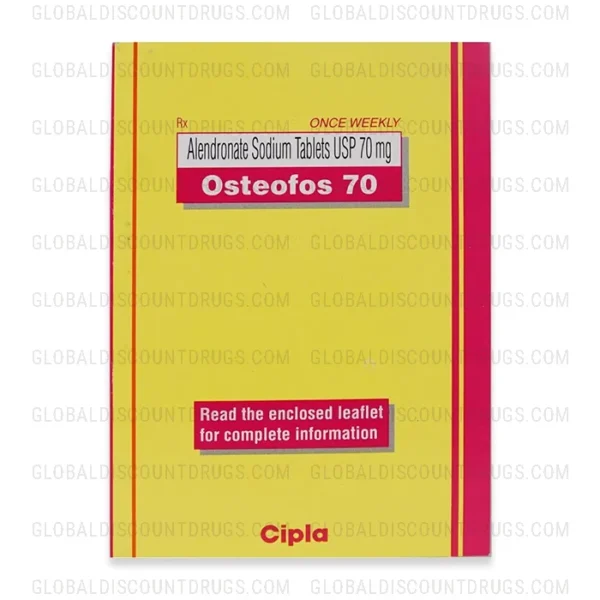
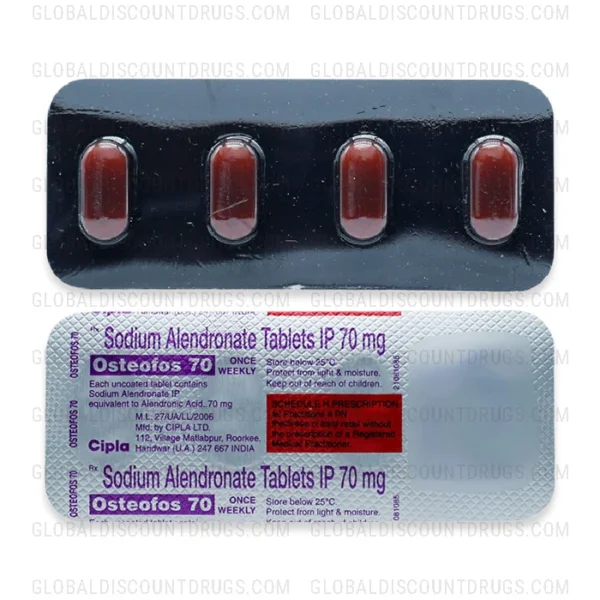
Alendronate 70mg
In StockAlendronate 70 mg Tablet is a prescription bisphosphonate generally taken once weekly to treat osteoporosis. Take it with plain water while upright and remain upright for at least 30 minutes afterward.
| Active Ingredient: | Alendronate |
|---|---|
| Indication: | Osteoporosis |
| Strength: | 70mg |
| Dosage Form: | Tablets |
| Manufacturer: | Cipla Limited |

Quick Overview
Alendronate 70mg is a once-weekly prescription tablet used to treat osteoporosis (thin, fragile bones) in postmenopausal women and to increase bone mass in men with osteoporosis. It belongs to the bisphosphonate class and works by slowing the cells that break down bone. It requires a prescription, and a prescriber must supervise treatment.
Medical Supervision and Regulatory Status
In the US, alendronate 70 mg is a prescription-only medicine approved by the FDA, it is not a controlled substance, and generic tablets are widely available.
Supervision is needed because the tablet can injure the esophagus if taken incorrectly, it can lower blood calcium, and rare problems such as jaw and thigh bone changes call for monitoring. A prescriber also checks kidney function and calcium levels before and during treatment.
Clinical Context
Osteoporosis is a condition in which bones lose density and strength, so they break more easily, most often in the spine, hip, and wrist. It is common after menopause because falling estrogen speeds bone loss, and it also affects men.
Treatment matters because a hip or spine fracture can cause lasting pain, loss of height, and reduced independence. Medicines like this one aim to lower fracture risk, and they work alongside calcium, vitamin D, weight-bearing exercise, and fall prevention.
Oral bisphosphonates such as alendronate are commonly used as a first-line option for postmenopausal women at higher fracture risk, according to US osteoporosis guidance. Other options include risedronate, zoledronic acid, denosumab, and bone-building medicines. The choice depends on fracture risk, kidney function, stomach and esophagus health, and a person’s ability to follow the dosing steps.
How Alendronate 70mg Works
Alendronate is a bisphosphonate that attaches to bone and slows osteoclasts, the cells that break bone down, which helps bone density hold steady or rise.
With less bone breakdown, bones stay denser and are less likely to fracture, and the strongest evidence is for the spine and hip. Bone density may take months to improve. The drug stays in bone for years, which is why the schedule is only once a week.
Only a small fraction of each tablet is absorbed, and food, coffee, juice, and calcium reduce that amount further. This is why the dosing steps below are strict, and why skipping them can mean the medicine does little.
What Is Alendronate 70mg?
Alendronate 70 mg is an FDA-approved oral bisphosphonate tablet, and the details below summarize its class, ingredient, strength, dosing schedule, and legal status in the United States.
- Drug Class: Bisphosphonate (bone resorption inhibitor)
- Active Ingredient: Alendronate sodium (alendronic acid)
- Mechanism: Binds to bone and slows osteoclasts, which reduces bone breakdown.
- Available Forms and Strengths: Oral tablet, 70 mg. Other alendronate strengths and an oral solution exist for different uses and schedules.
- Dosing Frequency: One tablet once a week, on the same day each week, first thing in the morning.
- Regulatory Status: Prescription only (Rx) in the US. FDA-approved (brand name Fosamax). Not a controlled substance. Generic versions available.
Approved Uses
The FDA has approved the 70 mg once-weekly dose for two uses: treating osteoporosis in postmenopausal women and treating osteoporosis in men to increase bone mass.
- Osteoporosis in postmenopausal women: Used to treat the condition and lower the risk of fractures, including spine and hip fractures.
- Osteoporosis in men: Used to increase bone mass in men diagnosed with osteoporosis.
Other approved uses of alendronate, such as prevention of osteoporosis, steroid-related bone loss, and Paget’s disease of bone, use different strengths or schedules and are not covered on this page.
How to Use and Dosage
Your prescriber sets the dose, and the labeled amount is one 70 mg tablet once a week, taken first thing in the morning with plain water on an empty stomach.
Follow these steps every time. Pick one day of the week and keep it. After getting out of bed, swallow the tablet whole with a full glass (6 to 8 ounces) of plain water. Mineral water, coffee, tea, and juice reduce absorption. Do not chew, crush, or suck the tablet, because it can ulcerate the mouth and throat. Wait at least 30 minutes before the first food, drink, or other medicine of the day, including calcium and antacids. Stay upright, sitting or standing, for at least 30 minutes and until after your first meal. Never take it at bedtime or before getting out of bed for the day.
Calcium and vitamin D: Get enough calcium and vitamin D from food or supplements, as your prescriber advises. Take supplements at a different time of day, at least 30 minutes after alendronate.
Missed dose: Take one tablet the morning after you remember, then return to your usual weekly day. Do not take two tablets on the same day.
Stopping the medicine: The label describes no withdrawal effects, but bone protection depends on regular use. The drug stays in bone for years. Prescribers usually review treatment after several years, and some lower-risk patients may pause it. Do not stop on your own.
Side Effects
Side effects vary, and the most common ones with alendronate involve the digestive tract, such as stomach pain, heartburn, nausea, constipation, diarrhea, and gas, along with muscle or bone pain.
Alendronate has no boxed warning, but the serious risks below need attention.
Common effects: Reported effects include abdominal pain, heartburn or acid regurgitation, nausea, constipation, diarrhea, gas, a bloated feeling, difficulty swallowing, headache, and muscle, bone, or joint pain. Taking the tablet exactly as directed lowers the chance of stomach and esophagus problems.
Serious effects: Irritation or ulcers of the esophagus can occur, especially if the tablet is taken without enough water or if you lie down too soon, and stomach ulcers and bleeding have been reported. Low blood calcium can cause muscle spasms and tingling. Severe bone, joint, or muscle pain can start days to years after beginning treatment. Osteonecrosis of the jaw (damage to jaw bone) is rare and has been linked to dental procedures. Unusual thigh bone fractures, sometimes preceded by thigh, hip, or groin pain, have been reported with long-term use. Allergic reactions are possible.
Emergency Warning Signs
- Chest pain, or new pain behind the breastbone
- Pain or difficulty when swallowing, or a feeling that food is stuck
- Vomiting blood, or black, tarry stools
- Swelling of the face, lips, tongue, or throat, hives, or trouble breathing
- Muscle spasms, cramps, or numbness and tingling around the mouth or in the fingers
- New pain in the thigh, hip, or groin, especially after a minor fall or no injury
- Jaw pain, swelling, loose teeth, or exposed bone in the mouth
Call 911 or go to the nearest emergency room for chest pain, vomiting blood, black stools, or swelling with trouble breathing. For swallowing problems or new heartburn, stop taking tablets and call your prescriber the same day. Spasms, thigh or groin pain, and jaw symptoms also need prompt medical attention. For a suspected overdose, call Poison Control at 1-800-222-1222.
Warnings and Precautions
Alendronate must not be used if you cannot sit or stand upright for 30 minutes, have an esophagus that empties slowly, have low blood calcium, or are allergic to it.
A narrowed esophagus (stricture) or achalasia (a swallowing disorder) delays emptying and raises the risk of damage. Low blood calcium must be corrected before starting. Use caution with active upper digestive problems, including trouble swallowing, esophageal disease, gastritis, duodenitis, and ulcers, and discuss Barrett’s esophagus with your prescriber before starting.
Interactions are mostly about absorption and stomach irritation. Calcium supplements, antacids containing magnesium or aluminum, iron, and multivitamins reduce absorption, so wait at least 30 minutes after alendronate before taking them. NSAIDs such as ibuprofen and naproxen, and aspirin, may add to stomach irritation. Corticosteroids and chemotherapy are among the factors that raise the risk of jaw bone problems. The label does not list an alcohol interaction, but alcohol can irritate the stomach, so ask your prescriber about it. Tell your pharmacist about all prescriptions, over-the-counter products, and supplements.
Pregnancy and breastfeeding need a careful discussion. The label notes that animal studies showed harm to the fetus and that human data are limited, and alendronate stays in bone for years. Tell your prescriber if you could become pregnant or are breastfeeding, because it is not known whether the drug passes into breast milk.
Safety and effectiveness have not been established in children. No dose change is needed for older adults, since the label reports no age-related difference. Alendronate is not recommended for people with severe kidney impairment, defined as creatinine clearance below 35 mL/min.
Monitoring includes checking calcium and vitamin D levels, kidney function, and bone density over time. A dental exam before starting is advised for people with poor dental health or other jaw risk factors, and good oral hygiene and routine dental care should continue during treatment. Report new thigh or groin pain, severe bone or muscle pain, and any swallowing symptoms promptly.
Who Should Not Use This Medication
Some people should not take this medicine at all, and the label’s exclusions are listed below, so report each one that applies to your prescriber before the first tablet.
- Anyone with a narrowed esophagus (stricture) or achalasia
- Anyone who cannot stand or sit upright for at least 30 minutes
- Anyone with low blood calcium (hypocalcemia) that has not been corrected
- Anyone allergic to alendronate or any ingredient in the tablet
- Anyone with severe kidney impairment (creatinine clearance below 35 mL/min), for whom it is not recommended
Storage Instructions
Store tablets at room temperature, 68 to 77 degrees F (20 to 25 degrees C), in the original package, away from moisture and heat, and out of children’s reach.
Keep the tablets away from bathroom steam and hot cars, and use a child-resistant container. If a child swallows a tablet, call Poison Control.
For disposal, use a drug take-back site at a local pharmacy or police station, or an FDA-listed take-back program. If none is available, FDA guidance is to mix the tablets with used coffee grounds or cat litter, seal them in a bag, and place the bag in household trash. Remove personal details from the empty package. Do not flush the tablets unless the label directs it.
Frequently Asked Questions
What is the cost of Alendronate 70mg without insurance?
The cost without insurance depends on the seller, brand availability, and pack size. Location and any available discounts can also shift what you pay. Generic alendronate tablets are generally more affordable than brand-name Fosamax when a generic is in stock. Because the dose is weekly, ask the pharmacy for the cash price of a supply, and compare licensed sellers.
How can I order Alendronate 70mg online?
Ordering online requires a valid prescription from a licensed US prescriber. Upload the prescription to the pharmacy or have your prescriber send it electronically, then a licensed US pharmacy fills it and delivers it to your door. Before paying, check that the pharmacy holds a state license and offers a pharmacist you can reach with questions.
Is Alendronate 70mg available over the counter?
No, alendronate 70 mg is not sold over the counter in the United States. It is available only with a prescription, though rules differ in other countries. Medical supervision is required because the tablet can injure the esophagus, affect calcium levels, and needs periodic review of kidney function and how long treatment should continue.
Does Alendronate 70mg require a prescription?
Yes, alendronate requires a prescription from a licensed clinician. The clinician confirms that osteoporosis is the right diagnosis, checks calcium, vitamin D, and kidney function, and asks about swallowing problems and dental health. Follow-up visits then regularly review fracture risk, bone density testing, and whether to continue, pause, or switch medicines.
How long does Alendronate 70mg take to work?
Bone density may begin to rise after about three months, though it can take longer. Alendronate does not give symptom relief, so you may feel no change, and fracture protection builds with continued use. Response varies, and your prescriber may order a bone density scan after a year or two to check progress.
Is it safe to stop taking Alendronate 70mg suddenly?
The label describes no withdrawal effects, but you should not quit without guidance, because bone protection depends on regular use. The drug stays in bone for years, so some benefit may continue after a planned break. Prescribers often reassess after about three to five years and may pause treatment in lower-risk patients.
Can Alendronate 70mg interact with other medicines?
Yes, alendronate interacts mainly with products that block its absorption or irritate the stomach. Calcium supplements, antacids containing magnesium or aluminum, iron, and multivitamins can reduce absorption, so wait at least 30 minutes after the tablet. NSAIDs such as ibuprofen and aspirin may add to stomach irritation, and any new medicine should be reviewed by your pharmacist.
What should I do if I miss a dose of Alendronate 70mg?
Take one tablet the morning after you remember, then return to your usual weekly day. Never take two tablets on the same day to make up for a missed one. Keep the same morning routine, with plain water, an empty stomach, and staying upright for 30 minutes. If you are unsure which day to resume, ask your pharmacist.
References
- DailyMed (NIH National Library of Medicine): FDA-approved prescribing information and patient information for alendronate sodium tablets, covering indications, dosing, contraindications, and warnings. https://dailymed.nlm.nih.gov/dailymed/drugInfo.cfm?setid=27f9a2d4-9783-4a5e-8634-b6c8c45afb1d&audience=consumer
- MedlinePlus (NIH National Library of Medicine): Plain-language drug information on alendronate, covering use, how to take it, precautions, and side effects. https://medlineplus.gov/druginfo/meds/a601011.html
- FDA (Drugs@FDA): Approval history and labeling for alendronate sodium tablets (Fosamax and generics).
Medical Disclaimer:
This content is for informational purposes only and does not constitute medical advice, diagnosis, or treatment. Consult a qualified specialist or physician before using Alendronate 70mg.
Prescription Required (Rx) to Buy?
This medication is not available over the counter. A valid prescription from a licensed healthcare
professional is required. Always consult your doctor before use.
| Quantity | 16, 24, 32, 8 |
|---|---|
| Indication | Osteoporosis |
| Active Ingredient | Alendronate |
| Pharmaceutical Form | Tablets |
| Manufacturer | Cipla Limited |
| Indian Brand | Osteofos 70mg |
| US Brand Name | Alendro, Alendronate, Fosamax |
| Generic Name | Alendronate |
| Dosage | 70mg |
| Drug Type | Tablets |